
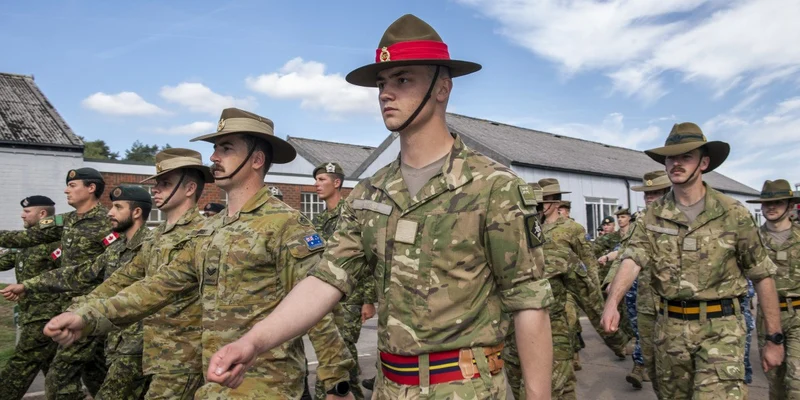
8 Types Of Military Hats And Their Uses
Every military hat on this list exists because a specific problem needed solving. A soldier standing guard in freezing wind needs something different than one moving through jungle heat, and a ceremonial parade calls for a completely different design than either. That’s the real reason there are so many types, not tradition alone.
This guide breaks down eight of them, from the everyday patrol cap to the ceremonial bearskin, and explains what each one is built for. By the end, you’ll know the difference between a beret and a garrison cap at a glance and why a unit or team would choose one hat over another for a specific role, climate, or occasion.
A Quick Look Before We Get Into Details
Before going through each hat one by one, here’s a fast way to see what each one is built for and what sets it apart.
| Hat | Best For | Key Feature |
| Patrol Cap | Everyday field wear | Folds flat, light, breathable |
| Beret | Ceremonial and unit identity | Colour marks role or unit |
| Boonie Hat | Hot climate, jungle terrain | Wide brim, foliage loop |
| Combat Helmet | Active combat protection | Kevlar, fragment resistance |
| Watch Cap | Cold weather, naval duty | No brim, covers ears |
| Garrison Cap | Formal, non-combat settings | Folded sides, no brim needed |
| Peaked Cap | Parades, formal ceremonies | Rigid peak, dress uniform |
| Bearskin | Ceremonial guard duty | Tall fur design, symbolic |
Patrol Cap
The patrol cap is the one you’ll see most often, and for good reason. It’s soft, flat on top, folds flat enough to tuck into a pocket, and has just enough brim to keep the sun off without getting in the way.
Built for daily use
It traces back to WWII and Vietnam-era field caps, designed to replace stiffer, less practical headgear. Today’s versions use nylon-polyester blends for durability and come in whatever camo pattern matches the uniform.
Made to fit the unit
Because it’s worn so often, many units look for custom military caps in NZ that match their own colours, patches, or camo, rather than settling for a generic fit.
Beret
The beret is one of the easiest military hats to recognise. Round, brimless, made from wool, and worn tilted to one side, it started with European mountain infantry units before spreading across armies worldwide by the mid-1900s.
More than a style choice
The Colour isn’t random. Green berets are tied to Special Forces units, maroon marks airborne troops, and blue is worn by UN peacekeeping personnel. Each Colour points to a specific role or unit, which is why the beret carries so much weight in military tradition.
Comfortable for long wear
Wool keeps it breathable and warm without adding bulk, which is part of why it’s stayed in service for so long.
Boonie Hat
The boonie hat is built for one job: keeping soldiers cool and hidden in hot, dense terrain. It came out of the Vietnam War, where jungle conditions demanded a hat that could handle heat, rain, and cover all at once.
Designed for concealment
A wide brim shields the face and neck from sun and branches, while small grommets on each side let heat escape instead of trapping it. A foliage loop around the crown lets soldiers tuck in leaves or grass for extra camouflage.
Why it’s stuck around
The chin strap keeps it secure during fast movement, and its comfort has made it just as popular with hikers and anglers as it is with soldiers.
Combat Helmet
Not every piece of headgear on this list is about comfort. The combat helmet exists purely to protect, and its design has changed more than any other over the past century.
From steel to modern builds
Early helmets, like the M1, were solid steel and heavy to wear for long stretches. Modern versions such as PASGT and FAST helmets use Kevlar and advanced composites instead, cutting weight while improving protection against fragments and impact.
Built to work with other gear
Today’s helmets are designed to hold night vision mounts, communication gear, and covers, making them as much a piece of equipment as a hat.
Watch Cap
The watch cap was built for one purpose: keeping sailors warm during long, cold watches on deck. It has no brim, fits close to the head, and can fold down to cover the ears when needed.
Warmth without bulk
Traditional versions use wool for insulation, while newer ones blend in synthetic fibres for easier care and faster drying. Either way, the fit stays snug enough to block out cold air.
A practical everyday option
Because it’s simple to produce and easy to wear, teams and clubs in colder regions often look at personalised caps in NZ as a way to get their own version of this same style, just with their own branding instead of a military one.
Garrison Cap
Also known as the overseas cap, the garrison cap is built around a simple idea: fold the sides in, and it stays secure without needing a brim at all.
A no-fuss design
Its folded-side construction keeps it close to the head, which is part of why it never fell out of use. Several allied forces, including the US, UK, Canada, and Australia, still issue it today for formal and non-combat settings.
Still in service
It’s not built for the field but for everyday wear where a full dress cap isn’t necessary.
Peaked Cap
The peaked cap is the one most people picture when they think of a formal military uniform. Its rigid, angled brim gives it a sharper look than any of the soft field caps.
Built for formality, not the field
The peak is usually made from plastic, cardboard, or metal, keeping its shape no matter how long it’s worn. Unit badges and insignia are typically fixed to the front, marking rank or branch at a glance.
Where it’s worn
You’ll see it at parades, graduations, and other formal ceremonies, always paired with a full dress uniform.
Bearskin
The bearskin is the tallest and most recognisable ceremonial hat on this list. It dates back to 17th-century Europe, where it was originally made from real bear fur.
A symbol, not standard issue
It’s closely tied to Royal Guard traditions in countries like the UK and Canada, where it’s worn during formal ceremonies rather than daily duty. Modern versions are made from synthetic fur instead, keeping the look intact without relying on animal hide.
Queries That Are Mostly Asked About Military Hats
What are the different types of military hats called?
The main types include the patrol cap, beret, boonie hat, watch cap, garrison cap, peaked cap, combat helmet, and bearskin. Each one is built for a specific purpose, ranging from daily field wear to formal ceremonial duty.
What hat do Navy SEALs wear?
It depends on the setting. In the field, SEALs commonly wear boonie hats for sun protection, patrol caps that match their uniform pattern, or ballistic helmets during direct action missions. Off duty, plain baseball-style caps are common.
What is a special forces cap called?
The most recognised is the beret, worn in specific colours such as green for U.S. Army Special Forces. In the field, operator caps and boonie hats are more commonly worn instead.
What is the folded military hat called?
This is the garrison cap, also known as a side cap or flight cap. It folds flat when not worn and is used mainly for formal or non-combat settings.
What is a flat-top military hat called?
A flat-top military hat is usually a patrol cap if it’s soft with a stiff visor or a kepi if it has a rigid, historical build. Both share a similar flat-top shape but differ in material and use.
Final Thoughts
Each hat on this list serves a different purpose, shaped by climate, role, or setting. A patrol cap is built for daily wear, a boonie hat for hot terrain, and a bearskin for ceremonial duty. None of them is interchangeable.
When choosing headgear for practical use, the deciding factor should always be function. Comfort in the field, protection during combat, or the right look for a formal occasion all depend on picking the hat that matches the job.

I am a content contributor at CustomHats.nz, creating informative content on custom hats and custom cap styles, material, embroidery, printing and customisation. I provide practical tips and creative ideas on understanding the other types of hats, planning the design, and choosing a hat that is suitable for their brand, event, team, and/or individual.